EB-3 Unskilled Other Workers Visa and the Pathway to US Green Cards
If you are reading this, chances are you or someone close to you has considered leaving for better opportunities abroad. You are not alone. A recent survey by Afrobarometer in 2024 found that 56% of Nigerians have thought about emigrating, a sharp increase from previous years. The reality is clear, people are searching for stability,…
If you are reading this, chances are you or someone close to you has considered leaving for better opportunities abroad. You are not alone. A recent survey by Afrobarometer in 2024 found that 56% of Nigerians have thought about emigrating, a sharp increase from previous years. The reality is clear, people are searching for stability, financial security, and a chance to build a better future for themselves and their families.
While many focus on student visas or work permits that demand specialized skills, one path remains widely unknown yet highly effective: the EB-3 Unskilled Other Workers Visa. This visa offers a direct route to permanent residency in the United States for those who qualify, even without a university degree or specialized professional experience.
Understanding the EB-3 Unskilled Other Workers Visa
The U.S. immigration system is structured around two primary visa categories: immigrant visas, which grant permanent residency (Green Cards), and non-immigrant visas, which allow temporary stays for work, study, business, or tourism. Unlike non-immigrant work visas such as the H-1B, L-1, and O-1, which have strict requirements on education and experience, the EB-3 Unskilled Visa is an immigrant visa that grants permanent residency through employment in occupations that require less than two years of training or experience.
This visa falls under the broader Employment-Based Third Preference (EB-3) visa category, which includes three subcategories:
- Skilled Workers (requiring at least two years of training or experience)
- Professionals (requiring a U.S. bachelor’s degree or foreign equivalent)
- Other Workers (unskilled positions requiring less than two years of training)
The EB-3 Other Workers Visa, also known as the unskilled worker visa, is the least restrictive. It is designed for roles that employers struggle to fill with American workers, such as jobs in construction, hospitality, caregiving, landscaping, and food processing.
A Practical Path to the American Dream
For many job seekers from developing countries, the EB-3 Unskilled Visa offers something most other immigration pathways do not: a realistic, legal, and structured route to a Green Card without requiring elite qualifications, corporate sponsorships, or the uncertainty of a lottery system.
Unlike the Diversity Visa Lottery, which grants Green Cards based purely on luck, the EB-3 process is employment-based. If a U.S. employer is willing to sponsor you, and the U.S. government verifies that no qualified American worker is available to fill the job, you become eligible for permanent residency.
This means that rather than hoping for a visa, you are actively securing a job offer that leads to legal entry and long-term residency in the U.S.
Eligibility Requirements for Nigerian and Global Applicants
One of the biggest advantages of the EB-3 Unskilled Visa is its accessibility. Unlike professional visas that require advanced degrees, certifications, or years of experience, this visa has minimal requirements:
- You must secure a job offer from a U.S. employer willing to sponsor you.
- The job must fall under the “Other Workers” category, meaning it requires less than two years of training or experience.
- Your employer must prove to the U.S. government that there are no available American workers for the position.
- You must meet health, security, and background clearance requirements set by U.S. immigration authorities.
Jobs in construction, hospitality, food services, caregiving, retail, and manufacturing are among the most common under this visa. If you have worked in these sectors, even informally, you may already qualify.
The EB-3 Unskilled Visa Application Process
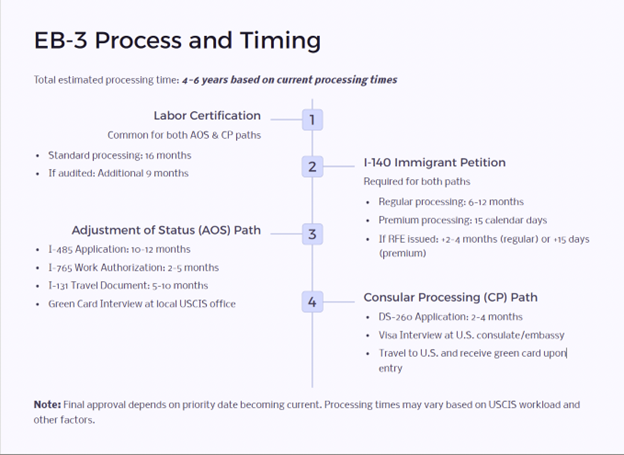
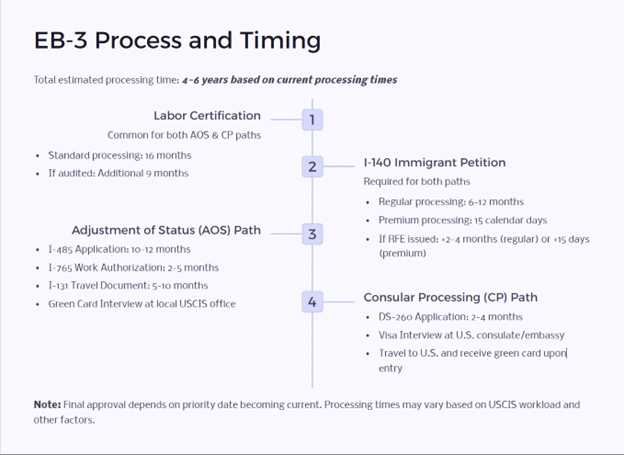
Applying for an EB-3 Unskilled Visa is a multi-step process, but the most crucial step is finding a willing U.S. employer. The employer, not the worker, initiates the application.
- Labor Certification (PERM Process) – The U.S. employer must first obtain PERM labor certification from the Department of Labor (DOL) to prove that hiring a foreign worker will not negatively affect American workers’ wages or job opportunities. This process can take 9 to 12 months.
- Immigrant Petition (Form I-140) – Once labor certification is approved, the employer files Form I-140, Immigrant Petition for Alien Worker, with the U.S. Citizenship and Immigration Services (USCIS). This confirms that they are sponsoring the worker for permanent residency.
- Visa Availability and Priority Date – Because the number of EB-3 visas issued annually is limited, applicants are placed in a queue based on their priority date (the date the employer filed their labor certification). As of 2025, the waiting period for EB-3 Other Workers is approximately 4-6 years.
- Final Visa Processing – Once the applicant’s priority date becomes current, they can apply for a Green Card through consular processing (if outside the U.S.) or adjustment of status (if already in the U.S.).
- Arrival and Work in the U.S. – Upon visa approval, the applicant enters the U.S. as a permanent resident, free to live and work permanently.
The Financial Cost of the EB-3 Process
Applying for an EB-3 Unskilled Visa involves costs, including government fees, legal representation, and employer expenses. Here are some standard fees:
- Form I-140 Filing Fee – $715
- Visa Processing Fee (DS-260) – $345
- Medical Examination and Biometrics Fee – Varies by country
- Green Card Fee – $220
Applicants working with legal representatives or agencies may also pay service fees ranging from $10,000 to $20,000, depending on the provider. However, some employers cover part or all of these costs as part of their recruitment process.
Challenges and Considerations
While the EB-3 Unskilled Visa presents a viable immigration route, there are challenges to consider:
- Long Processing Time – The waiting period can be 4-6 years, requiring patience and long-term planning.
- Employer Sponsorship Requirement – Finding an employer willing to sponsor a foreign worker is often the hardest step.
- Limited Annual Visa Quotas – The U.S. government allocates only 10,000 EB-3 Other Worker visas per year, leading to long backlogs.
Other Immigration Alternatives
For those considering multiple options, alternative U.S. immigration pathways include:
- EB-3 Skilled Worker Visa – Requires at least two years of experience in a skilled job.
- EB-2 National Interest Waiver (NIW) – Suitable for professionals with advanced degrees or exceptional abilities.
- Family Sponsorship – U.S. citizens and Green Card holders can petition for family members.
- Student Visas (F-1, J-1) – Studying in the U.S. can lead to post-graduation work opportunities and employer-sponsored visas.
Conclusion: A Door to Permanent Residency
For many seeking a better future in the United States, the EB-3 Unskilled Other Workers Visa offers a legitimate, structured, and long-term path to the American Dream. It does not rely on random luck like the Diversity Visa Lottery or demand exceptional qualifications like the EB-1 or EB-2.
Instead, it provides an opportunity for individuals without degrees or specialized skills to gain permanent residency and long-term stability through employment. For those willing to navigate the process and find an employer sponsor, this visa can open the door to a lifetime of opportunities in the U.S..